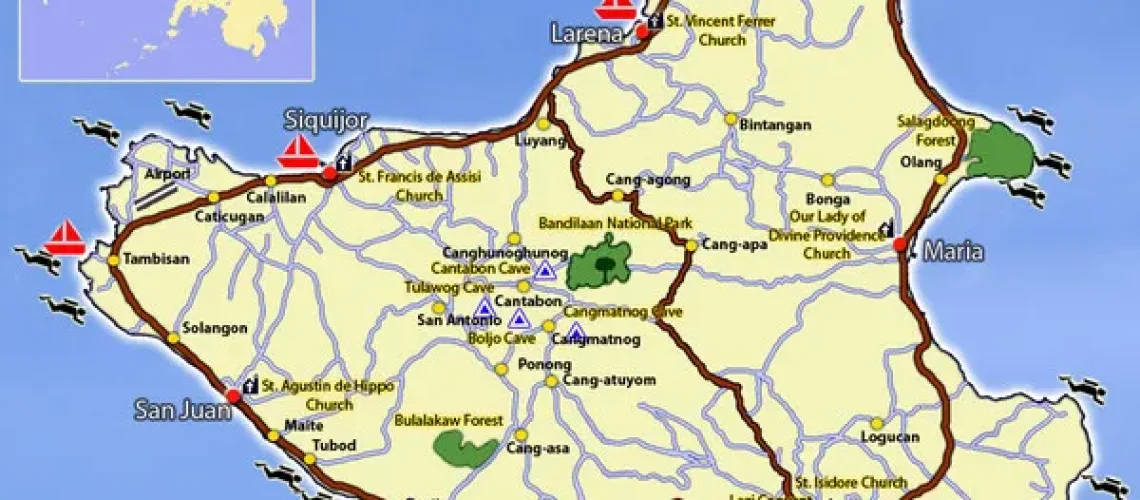

A Siquijor Island Tour is the best way to explore the island’s blend of pristine beaches, historical landmarks, and natural attractions — all in one loop around its 72-kilometer coastal road. Whether you’re riding a motorbike, hiring a tricycle, or joining a guided tour, this one-day adventure captures everything that makes Siquijor special: clear waters, rich marine life, centuries-old heritage, and local culture.
The entire trip can be completed in 6 to 8 hours, but many travelers prefer to stretch it out over a full day to enjoy swimming, sightseeing, and photography without rush. Along the way, you’ll pass through all six municipalities of Siquijor — Siquijor, San Juan, Lazi, Maria, Enrique Villanueva, and Larena — each offering its own unique charm.
Siquijor Island Tour Itinerary
Below is a suggested route followed by most tricycle and motorbike tours, starting from Siquijor Port and circling the island clockwise.
1. “I Love Siquijor” Signage – The Island’s Welcome Landmark
Location: Siquijor Town Proper
Start your journey at the “I Love Siquijor” Signage, located just minutes from the main port. Overlooking the blue waters of Siquijor Strait, this large white landmark welcomes visitors with a scenic backdrop perfect for photos.
It’s also a great place to pause before starting your loop — the sign marks kilometer zero for many local tours, symbolizing the beginning of your island adventure.
2. Paliton Beach – The Island’s Most Famous Sunset Spot
Entrance Fee: ₱20
Activities: Swimming, snorkeling, and photo opportunities
Located in San Juan, Paliton Beach is often called the “Little Boracay of Siquijor” due to its white sand and calm, clear waters. The area is lined with coconut palms and small fishing boats, reflecting the island’s coastal simplicity.
The beach name comes from “palit”, the Cebuano word for “buy”, as it used to be a marketplace for freshly caught fish. Today, it’s known as Siquijor’s best spot for sunset watching — the sky turns vibrant orange and pink while the sun dips over Negros Island.
3. Pitogo Cliff Viewing Deck – A Scenic Seaside Stop
Entrance Fee: ₱30
Activities: Photography and sightseeing
As you continue toward Lazi, stop by the Pitogo Cliff Viewpoint, a peaceful coastal area offering wide views of the Bohol Sea. The cliffs rise dramatically above turquoise waters, and on clear days, you can see the outlines of nearby islands.
This location remains less commercialized, so you can enjoy quiet moments here without crowds. The viewpoint is ideal for panoramic photos and drone shots that capture Siquijor’s coastal beauty from above.
4. Century-Old Balete Tree and Fish Spa – A Living Natural Landmark
Entrance Fee: ₱20
One of Siquijor’s most famous attractions, the Century-Old Balete Tree in Lazi is estimated to be more than 400 years old. Beneath it flows a natural spring that fills a freshwater pool where visitors can enjoy a fish spa — small fish gently nibble at your feet, creating a relaxing and unique experience.
The site also has a small souvenir area offering coconut-based products, herbal oils, and local crafts. It’s a refreshing stop surrounded by shade — perfect for cooling down during your mid-day tour.
5. Hapitanan Café and Restaurant – The Iconic “Broom Shot” Stop
Activities: Photography, snacks, and short rest
Hapitanan in Lazi is well-known for its “Broom Shot” photo session, where visitors pose as if flying on broomsticks — a fun, gravity-defying souvenir of your trip. Staff members assist with taking perfectly timed photos to make it look like you’re hovering in the air.
The stop also serves as a small café where you can rest and enjoy local snacks while overlooking the island’s inland scenery. It’s a lighthearted experience that adds fun to your island circuit.
6. Lazi Church and Convent – A National Cultural Treasure
Entrance Fee: ₱30
Location: Lazi Town
Officially known as the San Isidro Labrador Church, this coral-stone church and its adjacent convent are among the oldest and largest religious structures in the Philippines. Built in 1884, both buildings are recognized as National Historical Landmarks by the National Museum of the Philippines.
The church is known for its wooden floors made from tindalo and molave, while the convent — measuring about 42 meters long and 38 meters wide — now serves as a museum showcasing religious artifacts and historical photos.
This stop offers a glimpse into Siquijor’s colonial past and architectural heritage, representing more than a century of history and faith.
7. Cambugahay Falls – The Island’s Most Popular Waterfall
Entrance Fee: ₱50
Activities: Swimming, rope swing, and cliff jump
Located just a few minutes from the Lazi town proper, Cambugahay Falls is one of Siquijor’s most iconic natural attractions. It’s a three-tiered waterfall fed by a freshwater stream that flows into turquoise pools perfect for swimming.
Visitors descend about 135 concrete steps to reach the falls. The area offers rope swings where you can take an exhilarating plunge into the clear water — a favorite activity among both tourists and locals.
Because of its easy accessibility and natural beauty, Cambugahay attracts hundreds of visitors daily during peak season but still retains its charm thanks to well-managed tourism efforts.
8. Salagdoong Beach – Adventure and Ocean Views
Entrance Fee: ₱50
Activities: Cliff diving, swimming, snorkeling
Heading east, the next highlight is Salagdoong Beach in the town of Maria. Known for its concrete diving platforms and deep blue waters, it’s a favorite among thrill-seekers. The jump platforms stand at around 3 to 10 meters high, offering a safe but exciting experience.
The beach is located within a reforested area planted with molave and mahogany trees, part of a local conservation project from the 1980s. The cove itself features crystal-clear water and vibrant coral formations, making it a beautiful spot for snorkeling or simply relaxing by the shore.
9. Talingting’s Pan Bisaya – A Taste of Siquijor’s Local Bread
Before completing your island circuit, stop by Talingting’s Pan Bisaya Bakery in Enrique Villanueva. The bakery is famous for its traditional Filipino bread, baked in clay ovens using firewood — preserving a culinary tradition that dates back generations.
Pan Bisaya has a soft, chewy texture with a hint of smokiness from the wood-fired baking process. Locals often recommend pairing it with native coffee or hot chocolate, especially after a long day of touring. It’s a simple yet authentic taste of Siquijor’s everyday life.
Travel Essentials and Tips
Best Time to Visit
- Dry Season (November to May) – Ideal for clear skies, calm seas, and good road conditions.
- During the wet months (June–October), expect occasional rains but fewer crowds.
Transportation Options
- Motorbike rental: ₱350–₱500 per day (most popular and flexible option).
- Tricycle tour: Typically for 2–3 people, customizable itinerary.
Duration
- Full loop: Around 72 kilometers, typically 6–8 hours including stops.
What to Bring
- Swimwear, towel, change of clothes
- Reusable water bottle and eco bag
- Reef-safe sunscreen and insect repellent
- Waterproof phone case for waterfalls and beaches
Responsible Tourism Tips
- Follow entrance and environmental rules at each site.
- Avoid littering; take your trash with you.
- Support local businesses and community-managed attractions.
Conclusion
The Siquijor Island Tour offers a complete snapshot of what makes the island unforgettable — from its crystal-clear beaches and refreshing waterfalls to its century-old architecture and local traditions.
Every stop in the itinerary tells a story — the fishermen of Paliton, the heritage of Lazi, the playful energy at Hapitanan, and the peaceful views at Pitogo Cliff. It’s a journey that blends nature, culture, and community, allowing travelers to see the island’s beauty from every angle.
Whether you’re visiting for a day or staying longer, the Siquijor Island Tour is a must-do experience that truly defines the island — authentic, scenic, and full of life.
